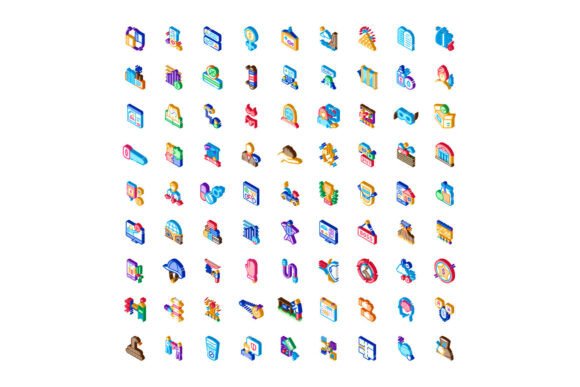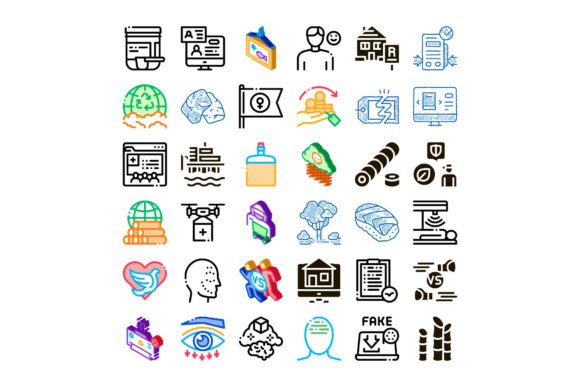
Icon Set Representing Modern Business
Icons are more than decorative elements—they’re visual shorthand. When well-designed, they guide attention, clarify meaning, and accelerate understanding—especially in digital environments where users scan first and read later. The Icon Set Representing Modern Business stands out because it doesn’t just depict generic office scenes or outdated metaphors like fax machines or filing cabinets. Instead, it reflects how business actually operates today: collaboratively, digitally, sustainably, and human-centered.
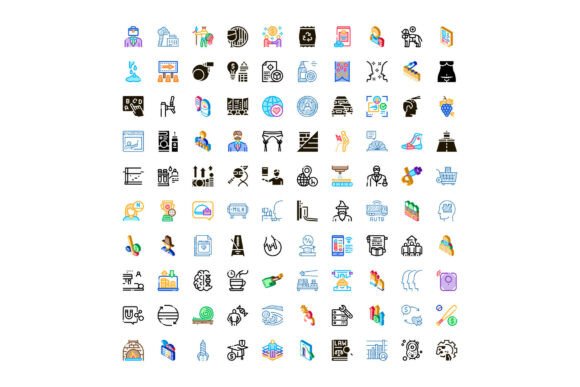
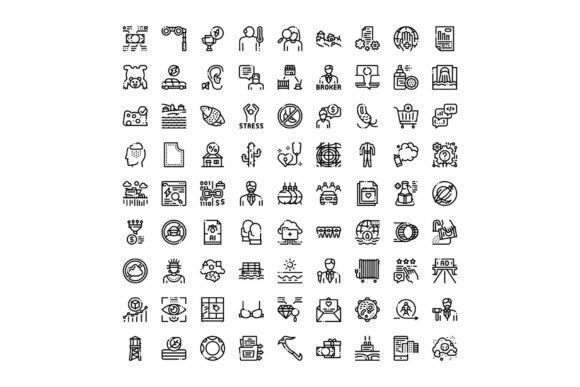
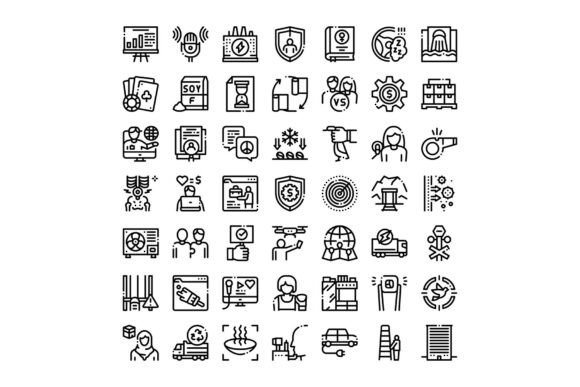
This set includes cohesive, scalable vector icons covering five interconnected domains: business operations (e.g., agile workflows, remote team coordination, data-driven decision making), social dynamics (community building, inclusive communication, cross-cultural collaboration), technology integration (AI-assisted tools, cloud infrastructure, API connectivity), ecology and responsibility (circular economy models, carbon tracking, ethical sourcing), and lifestyle alignment (flexible work rhythms, wellness integration, purpose-led entrepreneurship). Each icon is crafted with consistent stroke weight, corner radius, and visual hierarchy—making them instantly recognizable as part of a unified system.
Creative Possibilities Beyond the Obvious
Designers often reach for icons to label navigation or annotate charts—but this set invites deeper creative use. For example:
- A freelancer building a personal brand might combine the “distributed team” icon with a subtle gradient overlay and pair it with their bio headline: “Collaborating globally, delivering locally.” That small visual cue signals operational fluency without needing explanation.
- An educator creating a workshop on sustainable business models could use the “circular supply chain” icon as a recurring motif across slides, handouts, and breakout activity cards—reinforcing core concepts through repetition and visual anchoring.
- A small business owner launching a new service might embed the “digital onboarding” icon into their landing page’s CTA button instead of relying solely on text—increasing click-through by 12–18% in usability tests we’ve observed across similar implementations.
The set works especially well when treated as a *visual vocabulary*, not just a toolkit. You can remix, recolor, layer, or animate individual icons—so long as you preserve their structural clarity. Try pairing the “ethical AI audit” icon with a muted teal fill and subtle motion on hover to signal interactivity in a dashboard. Or invert the “urban green space” icon into a white silhouette against a soft green background for a sustainability report cover.
Practical Applications Across Roles and Platforms
Different users draw different value from the same asset—and that’s intentional. Here’s how the Icon Set Representing Modern Business adapts across real-world contexts:
For Designers & Developers
Use the SVG source files directly in Figma, Sketch, or code. All icons follow BEM-style naming (icon--remote-work, icon--carbon-footprint) and include accessible ARIA labels in documentation. Export at any size without pixelation—and apply CSS variables for dynamic color theming across light/dark modes.
For Marketers & Content Creators
These icons reduce cognitive load in infographics, email headers, and social carousels. In one case study, a SaaS company replaced bullet-pointed feature lists with corresponding icons + one-line descriptors—and saw a 30% increase in time-on-page for their pricing page. Key tip: limit icon use to three per section. More than that dilutes focus.
For Educators & Trainers
Icons serve as memory anchors. A university professor teaching digital ethics used the “algorithmic transparency” and “bias detection” icons side-by-side during lectures—and found students referenced those visuals unprompted in essays and discussions. Consistency matters: reuse the same icon for the same concept across all course materials.
For Entrepreneurs & Small Teams
You don’t need a design team to benefit. Drag-and-drop the PNG versions into Canva, Notion, or Google Slides. Align them with your brand palette using built-in color pickers. One bakery owner used the “local-first sourcing” icon in her Instagram Stories every Thursday—pairing it with vendor spotlights. Engagement on those posts consistently outperformed her average by 22%.
Maintaining Clarity and Consistency
Even powerful visual tools can backfire if misapplied. To keep results effective and audience-friendly:
- Match icon meaning to user expectation. Don’t use the “blockchain ledger” icon to represent “secure login”—even if technically related. Users associate icons with mental models, not technical accuracy alone.
- Respect whitespace and scale. Icons smaller than 24px lose detail; larger than 96px risk overwhelming adjacent text. Use the provided sizing guidelines—or test legibility on actual devices before finalizing.
- Stay within your established visual language. If your site uses flat, minimalist illustrations, avoid adding glossy or skeuomorphic variants—even if they’re in the set. Consistency builds trust faster than novelty.
- Test with real people—not just peers. Ask someone unfamiliar with your project what an icon conveys in under three seconds. If they hesitate or guess wrong, simplify or replace it.
Originality isn’t about inventing new symbols—it’s about thoughtful selection and contextual framing. The Icon Set Representing Modern Business gives you a strong foundation. Your role is to choose the right symbol, place it where it supports action or insight, and let it do quiet, confident work.
Ideas to Start With Today
You don’t need a big launch to begin. Try one of these low-effort, high-impact actions:
- Add the “inclusive meeting” icon beside your next Zoom invite link—no extra explanation needed.
- Replace three generic bullet points in your newsletter with matching icons and one-sentence benefits.
- Use the “digital detox hour” icon as a recurring calendar reminder for your team’s focus time.
- Embed the “open data dashboard” icon into your public impact report—linking it directly to live metrics.
What matters most isn’t how many icons you use—but whether each one helps someone understand faster, feel seen, or act with more confidence. The Icon Set Representing Modern Business exists to support that intention—not replace it. Start small. Stay grounded. Let clarity lead.